[bsa-protech-form]
The Art of Sales Follow-Up Closing a sale isn’t always a single interaction. Even with a thorough qualification, matching needs, masterful objection handling, and creating a sense of urgency with a customer, we often still hear, “I need to think about it.” What you do after hearing that dreaded phrase is what makes or breaks the completion of the sales process. Many salespeople make the mistake of crafting what they think is a perfect sales presentation and then sitting back and doing nothing. That’s where effective sales follow-up comes in—it’s the key to staying top-of-mind, building trust, and ultimately turning hesitation into a ‘yes.’
Don’t Be Afraid of Sales Follow-Up
Sales follow-up is what you do after your initial interaction to encourage your prospective customer to purchase. Statistics show that 80% of sales require an average of five follow-ups to close the deal, and 92% of salespeople give up after the fourth call.
Many salespeople are afraid of the follow-up stage of the sales process. Perhaps they fear annoying the customer or being seen as stalking or harassing. Or simply just afraid to hear “no.”But hearing no is a gift….it allows you to stop wasting time. Cross that customer off your list and move on. So, instead of being afraid to follow up, reframe your mindset. Thank the customers who give you a definite no so you don’t waste precious time. Instead of thinking you’re bothering your customers, remember that you are building a relationship with your customers and providing them with a solution to their problems. Handled properly, they will thank you with a “yes.”
Customers Are Busy
The number one reason a customer doesn’t get back to you right away isn’t because they are not interested…it’s because they are busy. Purchasing decisions often move slowly, even more so when the product or service is of substantial value. Most customers have a lot going on, and you need to be determined, resourceful, and strategic in your approach to capture their attention because most decision-makers are juggling many different demands on their time and budget.
Provide Value
Customers don’t want to feel like they are on the receiving end of a sales pitch. Instead, you can get better results from using the WIFM approach. What’s In It For Me? Letting your customers feel like there is value, i.e., something in it for them, will keep them engaged, and an engaged customer is more likely to buy, spend more, and become a repeat customer.
How do you engage your customers? Strive to remember something significant about them. Simply remembering things about people and showing that you care helps build relationships that drive sales. Keep notes about their pain points and problems you are helping them solve. To succeed, you must remember that you are not selling them a product but a solution to their problem. Always center the conversation on these pain points and how you solve them. One of the most successful messages you can send is a notification of a special offer or limited-time discount. This is a useful way to re-engage with a customer you haven’t spoken with for some time.
Speak To Your Customer’s How They Want to Be Spoken To
So, what do you do once you’re ready to make your follow-up contact? We know your customers are busy people. They do not have time for rambling emails and long phone calls. Keep your follow-ups succinct. An email follow-up should be no more than six lines in total length. And a follow-up telephone call should last no longer than ten minutes. It’s important to use various methods when reaching out to a customer until you find the mode that the customer prefers to use. Most marketers will suggest the first outreach be through email.
Email tends to be seen as the least invasive method. It can be automated, but it must be personalized. 72% of customers will only respond to personalized messaging. There’s nothing less appealing than receiving follow-up emails that are obviously automated scripts filled with generic messaging.
When emailing a customer, keeping it short and upbeat is important. Send a follow-up email shortly after the customer’s first visit. Express your interest and willingness to assist. Be sure to thank them for their time, recap what they liked, and how it solved their problems. Include a clear call to action. Use subject lines that remind the person who you are and grab their attention. A generic “Just Checking In” will likely remain unopened and land in the trash folder. Create a sense of urgency with a limited-time offer (“25% Off This Week Only”). Ask a direct question (“What’s Next?” or “Your thoughts?”) or make it personalized to demonstrate value (“Thought this article might be useful to you”).
Once you’ve sent one or two emails and heard nothing back, it may be time to pick up the phone, send a text, or send a handwritten note. Two to five days is the ideal time to wait before following up with an email. This will be considered your first follow-up email. If you don’t get a response from your first follow-up, you may follow up after 3 days, either by phone, text, or email. Research has shown that 97% of text messages are opened within 15 minutes, so keep the message short, sweet, and reader-friendly. If you choose to call, have a prepared voicemail script ready, so you’re not grasping for words when they don’t pick up. Wait another seven days before making another follow-up if you still have not received a response. Reach out again after another seven days, and wait another 14 days. Using a variety of email, phone calls, and texts allows your customers to communicate with you most comfortably and conveniently.
Always Define the Next Steps
One of the biggest mistakes salespeople make with follow-up calls is not clearly defining the next steps in the process. Talking about the next steps creates momentum, builds trust and reliability, reduces the likelihood of procrastination, and gets them vested in the sales process. This process should begin while the customer is still in your store and before the first follow-up contact. Let the customer know you will be in touch with them. Be specific. “I’ll call you next week” is vague. Setting a mutually agreed upon time to connect is specific and gets the customer’s buy-in. When you have a clear plan of when you’ll speak again, you reduce the risk of the customer ghosting you or the sale falling through the cracks.
Know When to Stop
There will come a certain point where your follow-up becomes pushy or pointless. Since, statistically, 80% of successful sales require five follow-ups on average, that would be a good baseline. At a certain point, a lack of response is a no or a no right now. Sending one final email, often called the “break-up email,” is a good idea before you stop contacting the customer. If the customer was interested but hadn’t gotten around to replying, the break-up email will often trigger a response. In essence, the break-up email asks the customer to tell you if they want to keep the conversation open or to confirm they’re not interested. It is usually short but sweet, reminding them you are always there to help. It goes without saying that at any point, if the customer comes back with a firm “no” or otherwise indicates a clear lack of interest, you should stop follow-up immediately.
Sales Follow-Up is a Key Weapon in Your Arsenal
Follow-ups let you stand out from the crowd. 44% of salespeople give up after just one follow-up call. Consistently following up means you will close sales others are giving up on. It’s worth repeating that 80% of customers will say “no” four times before they say “yes.” Another statistic to remember is that research also shows only 8% of qualified leads purchase on first contact, leaving 92% of potential sales you are missing by not following up!
By following this process, you are not harassing the customer. Rather, you are demonstrating your commitment to their overall satisfaction while nurturing relationships with them that increase retention and generate referrals, ultimately driving long-term sales growth. Please keep it going; your persistence will pay off!
Six Sales Principles for Business and Life Sales success in business and life is not a matter of chance—it’s built on a foundation of strong guiding principles. Certain fundamental sales principles apply universally, whether you’re a sales professional striving to close more deals, a leader shaping a high-performance team, or an individual looking to improve personal discipline. These principles provide a structured approach to decision-making, goal-setting, and personal development, ensuring sustained growth and achievement. By adopting these six essential sales principles, you can enhance your ability to navigate challenges, stay accountable, and create meaningful progress in every aspect of your life.
1) Training and Coaching
Training and coaching are crucial for ensuring individuals have the necessary skills and knowledge to succeed. Proper training helps people meet expectations and reach their potential, whether in business or at home. A well-trained person is more confident and capable, which leads to better outcomes. It’s also important to recognize that training is not one-sided—feedback and collaboration are essential. As demonstrated by a granddaughter learning to drive, clear instruction and familiarization with tools or processes are vital for success.
2) Non-negotiable Standards
Every organization or group needs a set of non-negotiable standards and non-compromising principles that must always be adhered to. These standards can apply to various areas such as sales, customer service, operations, and business financial practices. For individuals, these standards can include behavioral, educational, time management, financial, and health standards. Establishing these clear, non-negotiable standards and ensuring everyone understands them is key to ensuring consistency and success. Additionally, the criteria for implementing standards include setting clear expectations, justifying those standards, teaching them, rewarding adherence, and outlining consequences for violations.
3) Goals and Objectives
Setting clear and attainable goals is essential for progress. Goals provide direction, focus, and motivation. Leaders and parents should set goals at different levels (monthly, yearly, and long-term) and ensure they are challenging yet achievable. Goals should be written, visible, and measurable, helping individuals stay on track. Setting both individual and group goals ensures personal accountability while fostering teamwork. Leaders should consistently communicate progress and adjust as needed, ensuring that goals remain relevant and achievable.
4) An Accountability Structure
An effective accountability structure helps track progress based on concrete data, not just opinions. Accountability ensures that individuals stay focused on meeting their goals and maintaining standards. This can involve tracking key performance metrics like sales, profit margins, and inventory turnover. The key to effective accountability is using numbers and facts to guide decision-making rather than relying on subjective opinions. This objective approach helps identify areas for improvement, provides opportunities for positive reinforcement, and ensures that people are recognized for their hard work and achievements.
5) A Training/Learning Process
Everyone learns differently, and effective training requires addressing multiple learning styles. A comprehensive training process should incorporate various methods: listening, writing, reading, role-playing, and practical, hands-on experience. Individuals who go through all these steps are more likely to understand and retain the information. Leaders must ensure that training is thorough, consistent, and measurable. If someone struggles despite proper training, the issue may lie with their willingness rather than their ability to learn. Leaders should also foster a culture of continuous learning and development to maintain growth and adaptability.
6) Having A Mentor
Having a mentor or coach can provide invaluable guidance and support. A mentor offers an external perspective, helping you make more informed decisions, set realistic goals, and navigate challenges. Mentorship can come from parents, bosses, teachers, or even peers. The key is finding someone who can offer wisdom, feedback, and insight that helps you grow personally and professionally. Just as businesses benefit from advisors and consultants, individuals should cultivate relationships with mentors who can help them on their journey.
Mastering these six sales principles is about more than just improving sales numbers—it’s about cultivating a mindset that drives long-term success. By embracing continuous training, setting clear standards, establishing strong goals, maintaining accountability, fostering effective learning, and seeking mentorship, individuals and organizations can create a foundation for sustained growth and achievement. These principles not only lead to professional success but also instill discipline, resilience, and adaptability in everyday life. When consistently applied, they become the driving force behind personal and business excellence.
Subscribe to Brad Huisken’s FREE weekly newsletter, “Retail Sales & Sales Management Munchies,”. Type “Munchies” into the comments section and hit submit.
Todd Wanek Tackles Tariffs, Supply Chains, and U.S. Manufacturing Few leaders are as pivotal or outspoken in a transformative era for home furnishings as Todd Wanek, President and CEO of Ashley Furniture Industries. As the 2025 Trailblazer Award recipient from the Home Furnishings Association (HFA), Wanek recently joined HFA to share his perspective on the furniture industry’s current state and future trajectory. In a lively conversation facilitated by Shannon Williams, HFA’s CEO, Todd delved deep into resilience, supply chain upheavals, tariffs, technological innovation, and how retailers should position themselves amid uncertainty.
Tariffs and Trade: Reading the Global Tea Leaves
One of the burning issues on every retailer’s mind is tariffs and their wide-reaching impacts. Williams opened the discussion on tariffs, and Todd Wanek quickly contextualized the “noise” surrounding global trade policy. He pointed to the 2024 U.S. presidential race and rhetoric leading up to it as a key indicator: “If this caught you by surprise, you weren’t paying attention,” Wanek cautioned. He cited former President Trump’s intention to increase tariffs by $750 billion and advised businesses to focus on what they can control.
Ashley Furniture’s response? Proactive diversification. Wanek revealed that Ashley had ceased business with mainland China as of April 1st, acknowledging that the risks had become too great. “We read the tea leaves early,” Wanek said. “It’s every leader’s responsibility to see things before others see them and make the necessary changes.”
He predicted the U.S. would see average tariff rates of around 10–25%, though not uniformly applied. Diversification, especially away from single-country sourcing, is the watchword for contemporary supply chains.
Diversification: The Antidote to Uncertainty
Wanek repeatedly returned to the theme of diversification in sourcing and manufacturing—not just internationally but within the U.S. He warned against putting all eggs in one basket, particularly after witnessing so many organizations suffer for their reliance on singular supply chains during the COVID shockwaves and tariff changes. “Ashley’s always had a diversified supply chain; everyone needs to be thinking about it,” he urged.
Wanek noted that countries like Vietnam, Cambodia, and Malaysia remain key for categories like dining tables and bedroom furniture. Still, there is no clear “winner” benefitting from the new tariff terrain. Instead, the focus should be on spreading risk, reshoring where possible, and investing in domestic automation to remain globally competitive.
Economic Outlook: Relative Flatness, Not Crisis
As speculation swirled around recession risks, Wanek took a measured stance. Recessions, he clarified, are technical—a couple of quarters of negative or near-zero growth. “I don’t see anything like 2008 or 2009,” Wanek reassured listeners. While 2025 might be bumpy, he predicted relative flatness, not collapse, with the potential for stimulus-driven growth in 2025 and beyond.
For retailers, this means focusing sharply on the levers within their control—operating with excellence, urgency, and efficiency—and not reacting blindly to headlines. “Circle of concern versus circle of control,” Wanek echoed Stephen Covey’s famed advice.
Reshoring and Automation: The Real Cost-Benefit Equation
Given Ashley’s aggressive moves back to U.S. production, many wanted to know: Can American manufacturing really compete against low-cost international rivals? Wanek didn’t sugarcoat the challenge—sourcing labor in the U.S. at $25/hour versus $2/hour in Vietnam is only viable with heavy automation.
The key, he said, is leveraging technology—robotics, AI-driven scheduling, and process optimization—to drive U.S.-based plants toward global competitiveness. “It’s only with automation and efficiency that furniture comes back sustainably,” he argued. Companies must be wary of investing in reshoring if those investments lack the resilience to withstand political reversals or administrative shifts.
Not every category is readily repatriated. Finished case goods and intricate veneer work remain particularly tough to re-establish domestically at scale. Where reshoring is pursued, it’s best paired with long-term vision and technological investment.
The Container Crisis: The Real Supply Chain Challenge
Tariffs are just one disruption; Wanek identified container capacity as the most acute supply chain problem facing furniture now. With cascading cancellations (“blank sailings”), containers marooned in origin ports, and wild price swings ($1,650 to 5,500 per container within months), predictable logistics have vanished.
Ashley’s response? Ramping up buffer inventory—holding up to one month more on hand than pre-pandemic levels—and ensuring multiple sourcing and shipping options are always alive and viable. “Option one, two, and three need to be available,” Wanek stated.
For retailers, he advised partnering with vendors capable of holding safety stock, adding: “Supply chain stability is paramount.”
Other Global Risks: Section 301, 232, and the De Minimis Endgame
Wanek pointed to a growing web of global economic hazards beyond simple headline tariffs, including Section 301 (targeting Chinese-built ships with hefty taxes) and Section 232 (duties based on wood and steel content). He cautioned retailers to keep these in their “circle of concern,” but not overcorrect—many of these measures may fluctuate or be reversed. The loss of “de minimis” (duty-free shipment below $800) will change eCommerce competition, routing more DTC business back to brick-and-mortar.
The insights of Todd Wanek reflect a deep understanding of the global forces shaping home furnishings retail and a clear view of how businesses can navigate complexity with agility, foresight, and technological investment. As retailers face mounting uncertainty—from trade policies to supply chain disruptions—Wanek’s message is both cautionary and empowering: focus on what you can control, diversify your operations, and leverage innovation to stay competitive.
But that’s only part of the story.
In part two of our conversation with Todd Wanek, we’ll explore the future: where the growth opportunities lie, the practical advice he offers retailers on thriving amid disruption, and the top three challenges he believes retailers must overcome to succeed in today’s volatile market.
Building a Winning Sales Strategy Plan Selling furniture isn’t just about having great products on the showroom floor—it’s about having a game plan. A solid sales strategy ensures every customer interaction moves toward closing a deal. At HFA Sales Academy, we believe that sales professionals in the furniture industry need a structured approach to maximize their opportunities, increase close rates, and create long-term customers.
This guide walks you through the three core areas of sales strategy in furniture retail:
- Building a Sales Strategic Plan
- Creating a Retail Sales Strategy
- Lead Generation Strategies for Sales Teams
How to Build a Sales Strategic Plan in the Furniture Industry
A sales strategic plan is the backbone of a furniture business. It aligns your sales team with clear goals, targeted efforts, and measurable outcomes. Here’s how to build one:
Step 1: Define Your Sales Goals
- Set monthly, quarterly, and annual revenue targets.
- Establish individual sales rep performance goals.
- Break down targets by product categories (e.g., bedroom, living room, recliners, mattresses).
Step 2: Know Your Customer Base
- Use customer data to identify high-value buyers.
- Understand what drives their purchasing decisions (price, financing options, delivery speed, quality, etc.).
- Train your team to ask the right questions to uncover customer needs.
Step 3: Establish a Proven Sales Process
At HFA Sales Academy, we teach a structured, repeatable sales process designed for furniture sales professionals. Your process should include:
- Greeting & Building Rapport: Make every customer feel welcome.
- Qualifying Questions: Ask what they are looking for, why they need it, and when.
- Product Demonstration: Show the features and benefits in a way that solves their problem.
- Closing Techniques: Overcome objections and ask for the sale with confidence.
Step 4: Measure & Adjust
- To evaluate performance, use sales metrics like closing ratio, average ticket size, and financing approvals.
- Hold weekly sales meetings to review progress and adjust strategies as needed.
How to Create a Retail Sales Strategy for Furniture Sales
A retail sales strategy focuses on driving more foot traffic, improving customer experience, and increasing conversion rates in a furniture store.
Optimizing the In-Store Experience
- Layout Matters: Arrange your showroom to guide customers naturally through high-margin items first.
- Engagement Zones: Have areas where customers can interact with materials, try out recliners, or compare styles.
- Digital Assistance: Train your team to use tablets or kiosks to show extended inventory, financing options, or delivery times.
Upselling & Cross-Selling Strategies
- Bundle Packages: Offer matching end tables with sofas or mattress protectors with beds.
- Warranties & Protection Plans: Position these as value-adds, not just an extra cost.
- Room Design Consultations: Sell complete room setups rather than one-off pieces.
Train Your Sales Team
- Role-Playing Scenarios: At HFA Sales Academy, we emphasize practice to help salespeople refine their approach.
- Product Knowledge: Reps should know every detail about frame construction, cushion materials, and fabric durability.
- Finance & Payment Options: Many customers hesitate due to price—make sure your team can confidently discuss financing.
Lead Generation Strategies for Furniture Sales Teams
A great showroom experience is crucial, but lead generation is about getting people into the store or engaged online.
Leveraging Social Media & Digital Marketing
- Post daily on Facebook and Instagram, showcasing new arrivals, customer testimonials, and limited-time offers.
- Use paid ads targeting homeowners, newlyweds, and people moving to new homes.
- Offer a ‘Design Quiz’ or downloadable style guide in exchange for an email address.
Building a Referral Program
- Offer a $50 gift card or store credit for customers who refer friends.
- Reach out to past customers to remind them about upcoming promotions.
- Partner with local realtors or interior designers who can send you leads.
Email & SMS Campaigns
- Send appointment reminders, new collection announcements, and exclusive discounts.
- Follow up on quotes or in-store visits with a personalized message.
- Use text messaging for flash sales—90% of texts are read within 3 minutes!
Community Engagement & Events
- Host in-store events like ‘Sip & Shop’ nights or DIY furniture workshops.
- Sponsor local home shows or charity events to build brand awareness.
- Partner with moving companies to offer exclusive discounts to new homeowners.
Turn Strategy into Sales with HFA Sales Academy
A strong sales strategy isn’t about guesswork but consistency, training, and execution. At HFA Sales Academy, we provide furniture-specific sales training that helps teams increase close rates, improve customer experiences, and maximize revenue.
Whether you’re looking to refine your sales process, develop your team’s skills, or increase lead generation, we’ve got the tools to help you succeed.
👉 Join the HFA Sales Academy today and start selling smarter, not harder!
MOTIVATE! Coaching Strategies During Challenging Times The home furnishings industry has been on a wild roller coaster ride over the last five years, with little sign of slowing down. From navigating the disruptions of a global pandemic to now facing potential import tariffs early in the year, retailers continue to adapt to a shifting landscape. Since furniture is largely a discretionary purchase, introducing price increases during uncertain times is understandably concerning. Yet, we may soon be left with no choice. In this climate, strong leadership is more important than ever—especially when it comes to coaching your sales team. Now is the time to lean into motivational and coaching strategies that not only guide your team through volatility but also empower them to stay focused, engaged, and productive on the sales floor.
I’m very fortunate to have the chance to speak with furniture retailers all over the United States regularly. One of the big concerns I hear from them consistently is their inability to ensure their sales team is engaged consistently to successfully sell on the sales floor daily. The overall traffic of consumers coming through the door is down for virtually everyone, so making the most of every opportunity is paramount to sales growth. This group of sales professionals is the most critical part of any furniture retail business, so their ‘care and feeding’ is an important priority.
Motivating a sales team during tough times can be challenging, but implementing a structured approach can help foster resilience, boost morale, and improve performance. Here are several motivational and coaching strategies for you to consider as you are contemplating how to keep your team moving forward:
- Set Clear Goals and Expectations: Clearly define what success looks like for each team member and your team as a whole. Ensure these objectives are realistic and achievable, even in tough times. Give each person a say in the end goal, and work together to ensure you are on the same page about how to achieve it.
- Provide Regular Feedback and Support: Offer constructive feedback frequently. I highly encourage establishing regular and reoccurring 1:1 sessions to keep the dialog going. Acknowledge what they’re doing right and provide areas for improvement. Recognize individual and team achievements to reinforce positive behavior and energize and engage the team.
- Offer Continuous Training and Professional Development: Equip your team with the tools they need to succeed by offering ongoing training opportunities. Improving their refreshing selling skills, product knowledge, and customer service techniques can help them feel more confident and effective. Periodic ‘Lunch and Learns’ with various content and webinars is a good and efficient way to constantly reinforce the need for continuous learning to keep all skills sharp and current.
- Improve Product Knowledge: Ensure the team is well-versed in the features and benefits of the furniture products they are selling. This will increase knowledge and confidence, improving selling results. It will also help them better provide solutions to their customers while building successful, long-term relationships.
- Create a Positive Work Environment: Focus on building a supportive, collaborative team culture where everyone feels valued and included. Encourage open communication, hold team-building activities, and maintain a positive leadership attitude to boost morale. This effort is more critical than ever to ensure your team feels their contributions are appreciated. Studies show that people who feel undervalued in their workplace are four times more likely to resign and move to a different position during challenging times, an important area to focus on.
- Incentivize Performance: Develop and implement contests and other incentives to reward exceptional performance. Consider using monetary and non-monetary options like bonuses, commissions, gift cards, or employee of the month recognitions for reaching and exceeding targets. Look at all areas of compensation for your team and find ways to provide more opportunities to increase their take-home pay.
- Leverage Competition: Great sales professionals are motivated by two primary things: money and competition. Introduce healthy competition through contests and challenges to inspire team members to push themselves for more. Ensure the goals are achievable and the competitive event encourages rather than discourages each one.
- Focus on Customer Relationships: Encourage the team to build strong relationships with customers, focusing on always providing excellent service. Positive customer interactions can lead to repeat business and referrals.
- Adjust Strategies as Needed: Be willing to adapt sales strategies and approaches based on the current market condition. Find creative ways to update a process or do what you typically do differently. Encourage the team to offer ideas and feedback and be part of the solution-finding journey towards better results.
- Be Transparent and Communicative: Keep the team informed about the company’s status or condition, changes that affect them directly, and steps to improve the results. Transparency can help build trust and reduce anxiety, so talking and sharing challenges and wins is critical to keep everyone positively focused during these times.
- Encourage ‘Wellness Days‘: Recognize the stress your team is feeling during tough times and offer them an opportunity to change the landscape and environment by taking some time away from the sales floor. This will allow your team a break from the daily pressure they may be feeling, clear their heads to think and act more positively, and carefully address any anxiety they might be feeling.
- Lead by Example: Your attitude and energy significantly impact the team, so being aware of that each day is significantly important. Demonstrate resilience, optimism, and a strong work ethic to inspire and motivate your team to do the same.
Implementing these motivation and coaching strategies requires consistency and discipline. It is so important to demonstrate genuine care for your sales team’s professional and personal well-being. By cultivating a supportive and motivating environment, you can help your sales team navigate challenging periods effectively, which is a great benefit for you both!
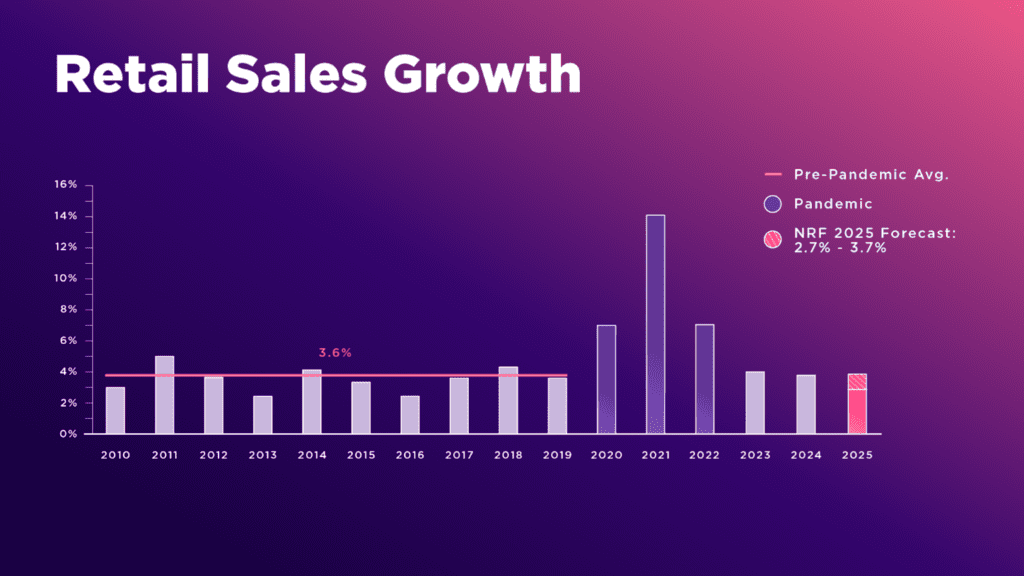
2025 Retail Outlook: Steady Growth Amid Shifting Consumer Sentiment As home furnishings retailers and manufacturers plan for the year ahead, there’s cautious optimism on the horizon. According to the National Retail Federation’s (NRF) latest 2025 Retail Outlook forecast, retail sales in 2025 are expected to grow between 2.7% and 3.7% over 2024, totaling between $5.42 trillion and $5.48 trillion.
The announcement came during NRF’s State of Retail & the Consumer virtual event, painting a picture of an economy still moving forward — bolstered by low unemployment and real wage gains — even as policy uncertainty and inflation concerns challenge consumer and business confidence.
“Overall, the economy has shown continued momentum so far in 2025 — bolstered by low unemployment and real wage gains — however, significant policy uncertainty is weighing on consumer and business confidence,” said NRF President and CEO Matthew Shay.
For home furnishings businesses, the message is clear: consumers are still spending, but businesses must stay sharp, innovative, and responsive to shifting expectations.
Online and Non-Store Growth Continues to Accelerate
One of the biggest takeaways for 2025 is the ongoing surge in non-store and online sales, which are expected to grow between 7% and 9% year over year, potentially reaching $1.6 trillion.
For home furnishings retailers, this underscores the importance of having a strong digital presence — from offering seamless online shopping to integrating omnichannel experiences that connect your showroom with your website and social platforms.
A Consumer-Driven Economy, Even in Uncertain Times
While overall growth is expected to slow slightly compared to the 3.6% increase in 2024, NRF Chief Economist Jack Kleinhenz stressed that consumer spending remains resilient:
“Any way you look at it, a lot is riding on the consumer. While we expect slower growth, consumer fundamentals remain intact, supported by low unemployment, slower but steady income growth, and solid household finances.”
Kleinhenz added that despite softening consumer confidence — fueled by lingering inflation and tariff concerns — there’s no immediate sign of a major spending pullback, especially with household balance sheets remaining relatively healthy and employment steady.
What This Means for Home Furnishings Retailers
The NRF’s 2025 retail outlook highlights both opportunities and challenges for retailers and manufacturers in the home furnishings industry. Now is the time to:
Focus on Customer Experience- Whether online or in-store, consumers are still spending — and your ability to meet their needs, offer flexibility, and create value will be critical to maintaining sales momentum.
Be Proactive About Policy Shifts- With tariffs and economic policy shifts playing a growing role in shaping prices and consumer behavior, smart sourcing, inventory management, and transparent communication will be more important than ever.
Embrace Digital Growth – The continued strength of non-store sales offers an excellent opportunity for home furnishings businesses to expand reach through ecommerce platforms, social commerce, and digital advertising strategies.
Keep an Eye on Fundamentals- While consumer sentiment may shift, underlying economic indicators — such as employment, income, and credit health — are still the strongest predictors of spending.
Stay Ahead of Industry Shifts: Upcoming HFA Webinar
Want deeper insights into what the future holds for the home furnishings industry? Don’t miss the Home Furnishings Association’s exclusive webinar, The Future of Home Furnishings Retail, with Todd Wanek.
Join Todd Wanek, President and CEO of Ashley Furniture Industries, as he shares his vision for the future of home furnishings 2025 retail outlook — from market trends and shifting consumer behaviors to the innovations that will shape tomorrow’s retail landscape.
At the Home Furnishings Association, we understand the complexities and opportunities facing retailers and manufacturers in this dynamic market. As 2025 unfolds, we’ll continue to monitor the data, advocate for your interests, and share insights to help you stay ahead.
Stay tuned for more updates, resources, and peer discussions designed to help your business grow.
GOP Lawmakers & Economists Agree, Tariffs Are a Tax Increase This tax season, lawmakers and economic leaders are reminding the American public that tariffs are taxes.
From constitutional concerns about executive overreach to warnings about rising consumer prices, an increasing number of Republican lawmakers worry that tariffs will weigh American families down with burdensome costs despite the recent 90-day pause on some tariffs.
A study from the Yale Budget Lab states that President Donald Trump’s April 2 tariffs will cost American households $2,100 a year. Combined with the rest of the 2025 tariffs, this cost balloons up to $3,800.
Economists confirm that these tariffs tax American buyers and consistently negatively impact the consumer. With a global tariff of 10% on all imports still in effect, American buyers are sure to feel the pain in their wallets.
On this Tax Day, many Americans are left wondering: How will tariffs hurt my bottom line?
Read What Republicans And Economic Experts Are Saying:
National Taxpayers Union (NTU) President Pete Sepp: “Tariffs are a tax increase on American households and manufacturers.” (National Taxpayers Union, 2/1/25)
Senator Rand Paul (R-KY): “Tariffs are taxes, and the power to tax belongs to Congress – not the President. Our Founders were clear: tax policy should never rest in the hands of one person. Abusing emergency powers to impose blanket tariffs not only drives up costs for American families but also tramples on the Constitution. It’s time Congress reasserts its authority and restores the balance of power.” (FOX Business, 4/9/25)
- “Tariffs are taxes and Americans are paying the price.” (ABC News, 4/7/25)
Senator Ted Cruz (R-TX): “Tariffs are a tax on consumers, and I’m not a fan of jacking up taxes on American consumers, so my hope is these tariffs are short-lived, and they serve as leverage to lower tariffs across the globe … If we’re in a scenario 30 days from now, 60 days from now, 90 days from now with massive American tariffs and massive tariffs on American goods in every other country on Earth, it’s a terrible outcome.” (ABC News, 4/7/25)
- “I’m seeing a lot of Republican cheerleaders that are kind of reflexively defending what the White House is doing. Listen, I love President Trump, I’m his strongest supporter, and I think he’s doing incredible things as President. But here’s one thing to understand, a tariff is a tax.” (The Houston Chronicle, 4/10/25)
Senator Mitch McConnell (R-KY): “As I have always warned, tariffs are bad policy, and trade wars with our partners hurt working people most. Tariffs drive up the cost of goods and services. They are a tax on everyday working Americans.” (Axios, 4/4/25)
Murat Tasci, Senior U.S. Economist, J.P. Morgan: “At the end of the day, tariffs are a tax on imports. How much this tax raises final consumer prices depends on factors, such as the elasticity of demand and the extent of exchange rate movement. However, the tax incidence nearly always falls on domestic sellers and consumers, and not foreign producers.” (J.P. Morgan, 4/7/25)
Gary Shapiro, CEO & Vice Chair, Consumer Technology Association (CTA): “President Trump’s sweeping global and reciprocal tariffs are massive tax hikes on Americans that will drive inflation, kill jobs on Main Street, and may cause a recession for the U.S. economy. These tariffs will raise consumer prices and will force our trade partners to retaliate.” (CTA, 4/2/25)
Mark Chenoweth, President, New Civil Liberties Alliance: “A tariff is a tax on Americans’ commerce with other countries. The Constitution assigns Congress exclusive power to impose tariffs and regulate foreign commerce.” (USA Today, 4/8/25)
Matt Preist, CEO, Footwear Distributors and Retailers of America (FDRA): “The tariffs act as taxes, driving up the costs of everyday goods like shoes, significantly burdening American families and businesses.” (FOX Business, 2/5/25)
Susan Schwab, Former U.S. Trade Representative under President George W. Bush: “Anyone who suggests a tariff is not a tax needs to go back to school.” (The Wall Street Journal, 4/3/25)
Steve Moore, Former Senior Economic Advisor under President Donald Trump: “I mean, Elon Musk is right that you know, tariffs are taxes. They can hurt the economy. We’ve got to have the most productive sector of the economy.” (The Hill, 4/9/25)
4/10/25 Update: Tariffs Pause and Supply Chain Disruption Trade policy again took center stage this week as the Trump Administration announced a dramatic shift in its approach to reciprocal tariffs. While the headlines may seem distant from day-to-day operations, these decisions are poised to significantly impact the home furnishings industry, from sourcing and pricing to inventory and logistics.
Tariffs Take a Turn: A 90-Day Pause—Except for China
On April 2, the Trump Administration rolled out its reciprocal tariffs plan. Just days later, President Trump announced a 90-day pause on those tariffs for all countries except China. During this pause, a 10% universal tariff will apply as the US pursues more favorable trade deals with more than 75 nations.
However, China has been singled out with a new 145% reciprocal tariff—effective immediately. Citing a “lack of respect” from China on global trade practices, the Administration made clear that this move is part of a broader strategy to level the playing field. China responded swiftly with its own 84% tariff on US goods, intensifying the ongoing trade standoff.
Since the reciprocal tariff policies were announced, US equity and bond markets have reacted negatively. Businesses, congressional members, and other stakeholders began focusing on a more concrete path forward on trade deals. With this pause, the Administration has shown its position as using reciprocal tariffs for negotiations on more fair-trade deals moving forward.
Why It Matters to Furniture Retailers
The US furniture supply chain is deeply intertwined with China, especially in categories like upholstery and case goods. This sudden tariff escalation will likely raise costs across the board, forcing many retailers and manufacturers to evaluate sourcing alternatives—or pass on cost increases to consumers. Meanwhile, Vietnam and India have been called out by US trade advisers as two of the more aggressive negotiators to watch during this negotiation window.
Early Signs of Fallout: Import Forecasts Drop
According to the National Retail Federation’s Global Port Tracker, import cargo volumes are expected to fall by 20% in the second half of the year. For the furniture sector specifically, 2025 could see a total decline of 15% in import volume. That means longer lead times, tighter inventory, and likely increases in freight costs. It signals for industry professionals to revisit their sourcing strategies and strengthen communication with logistics partners.
Looking Ahead
The markets have responded negatively to the tariff turbulence, but this 90-day pause signals that the Administration is using reciprocal tariffs as a negotiating tool. The outcomes of these talks—particularly the first new deal struck—will serve as a critical benchmark for future trade relationships.
What Should HFA Members Do Now?
- Evaluate sourcing channels—especially if you’re heavily dependent on China.
- Communicate pricing changes to customers early and clearly to maintain trust.
- Revisit inventory planning to prepare for delays or product shortages.
- Stay informed—policy shifts like this can happen fast and hit hard.
HFA will continue to monitor developments and update members with the insights they need to stay ahead. Whether navigating supply chain disruptions or rethinking product mix, staying informed is your best business advantage.
Thanks for reading. We’ll be back next week with more insights into policy developments that affect your business.
4/4/25 Update: Reciprocal Tariffs and De Minimis No More Tariffs and trade are front and center of President Trump’s domestic economic agenda. On Day 1 of his Administration, the President signed the America First Trade Policy Executive Order, which laid out a broad trade agenda, including an aggressive push for across-the-board tariffs and reciprocal tariffs. As the early April deadlines in that order approached, President Trump declared April 2, 2025 ‘Liberation Day.’
On April 2, 2025, President Trump announced an expansive set of tariffs on all countries exporting goods to the United States. Given the negative impacts of these recurring trade deficits, the president declared a national emergency, allowing these tariffs to be implemented under the authority of the International Emergency Economic Powers Act (IEEPA).
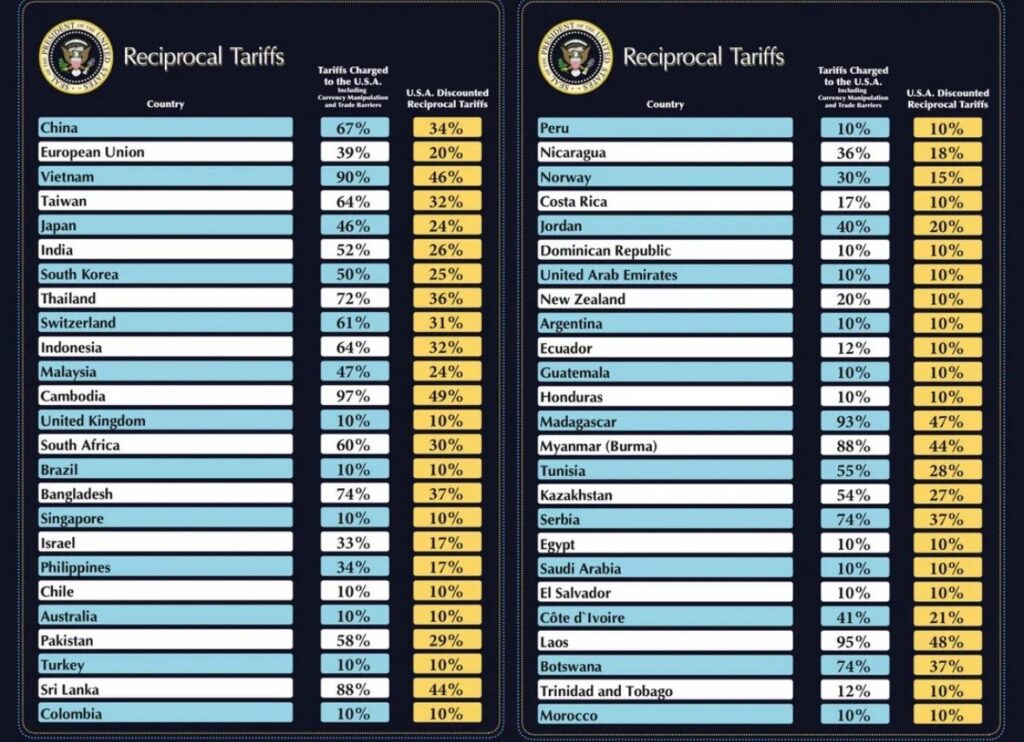
The President set a minimum 10% effective tariff rate (effective 12:10 am Eastern Time on April 5, 2025) for goods imported into the United States (from all countries), however, the Executive Order also creates adjusted tariff rates for countries with additional tariff and non-tariff barriers for US goods entering their country. Importantly for the home furnishings industry, the countries below will have adjusted tariff rates. (See full list White House Reciprocal Tariff Chart Apr 2025)
- China – 34%
- Vietnam – 46%
- India – 27%
- Indonesia – 32%
- Malaysia – 24%
These newly adjusted tariff rates will go into effect as of 12:01 a.m. Eastern Time on April 9, 2025. Another key point is that these reciprocal tariffs, specifically as they relate to China, will be additive to existing Section 301 (25%) and IEEPA (20%) tariffs.
However, these reciprocal tariffs WILL NOT apply to a selection of goods, including those listed in Annex-II Reciprocal Tariff Order:
- Articles subject to 50 USC 1702(b) (informational materials)
- Steel/aluminum articles and automobiles and parts already subject to Section 232 tariffs
- Copper, pharmaceuticals, semiconductors, and lumber articles
- Any articles that may be subject to future Section 232 tariffs
- Bullion
- Energy and other minerals not available in the United States
Previously, the Section 301 tariffs on goods imported from China led to accelerated supply chain diversification with production leaving China. The President’s goal with this reciprocal tariff effort is to re-shore manufacturing jobs in the United States and bring in lost revenue from years of trade disparities across the world. A movement back to the United States for the furniture industry is reliant on more than trade policy; Permitting, training a skilled workforce, and managing the higher costs of U.S. manufacturing are significant hurdles.
HFA is continuing to monitor the impact of these actions on home furnishings retailers, our suppliers, and consumers.
De Minimis Reforms
During recent HFA Member fly-ins in Washington, DC, our members raised issues with non-compliant products entering the U.S. market via the de minimis exemption, primarily from China. Currently, products with a value of less than $800 are expedited through the customs process and are not eligible for tariffs and/or duties. In addition to the reciprocal tariffs, the Administration is eliminating the de minimis exemption on goods imported from China, beginning on May 2, 2025.
In lieu of the de minimis exemption, goods imported from China, shipped by international postal networks, will be subject to duties of:
- 30% of their value effective 12:01 am EDT May 2, 2025.
- or $25 per item effective 12:01 am EDT May 2, 2025 – before 12:01 am EDT June 1, 2025.
- Or $50 per item effective 12:01 am EDT June 1, 2025
Carriers are responsible for paying the duties owed.
The sweeping changes to U.S. trade policy, including across-the-board tariffs and the elimination of the de minimis exemption for Chinese imports, mark a significant shift in global trade dynamics. While the administration aims to boost domestic manufacturing and address trade imbalances, these policies will have far-reaching implications for home furnishings retailers, suppliers, and consumers. The Home Furnishings Association remains committed to monitoring these developments, advocating for industry interests, and providing timely updates to help businesses navigate this evolving landscape. Catch HFA Lobbyist, Chris Andresen, as he talks live about the implications of the above issues facing the home furnishings industry.
Navigating Liberation Day Tariff Updates as HFA Sets off to DC The Home Furnishings Association (HFA) is closely monitoring the recent tariff updates affecting exports, which have had significant impacts across multiple regions: 46% from Vietnam, 34% from China, 32% from Taiwan, and 20% from the EU.
Recently, manufacturers have responded in diverse ways to mitigate the effects of these tariff updates. Some are offering further discounts to counter the 10% tariffs from China, while others are absorbing the costs entirely, relocating operations, or adopting a wait-and-see approach. Unfortunately, this round of tariff increases will negatively impact all stakeholders in the home furnishings ecosystem. Even domestic manufacturers, who may not directly import finished goods, rely on imported components such as hardware, upholstery, and cut-and-sew kits.
Recognizing the gravity of the situation, HFA has been actively engaging in discussions with officials on Capitol Hill, liaising with prominent media outlets, and collaborating with members to provide essential data that supports informed policymaking. As we continue our advocacy efforts, the broader economic and political landscape surrounding tariffs is evolving rapidly.

CBS News reports that new survey data finds poll respondents “say[ing] the Trump administration is focused too much on tariffs, and by contrast, is not focused enough on lowering prices.” Republican lawmakers are increasingly alarmed over the economic turmoil that could follow a new wave of tariffs.
Growing Concerns Over Tariff Policy and Economic Stability
With new data and expert opinions emerging, the national conversation is shifting toward the long-term effects of these trade policies on businesses, consumers, and overall economic stability. Recent reports highlight growing concerns among economists, business leaders, and lawmakers about the potential ripple effects of increased tariffs.
CBS News reports that new survey data shows respondents believe the Trump administration is too focused on tariffs and not focused enough on lowering prices. Meanwhile, Republican lawmakers are increasingly alarmed over the economic turmoil that could follow a new wave of tariffs.
While President Trump has framed his plan as a “Liberation Day” for the American economy, concerns are mounting that additional tariffs could drive up consumer costs, disrupt key industries, and rattle financial markets. Over the weekend, Goldman Sachs raised its 12-month recession probability to 35%, up from 20%, citing weaker economic conditions and escalating trade tensions, while the Federal Reserve Bank of Atlanta forecasts a contraction in the first quarter with minimal GDP growth.
A joint survey released by the Richmond Fed, the Atlanta Fed, and Duke University found that companies that don’t import from Canada, Mexico, and China expect to raise prices by 2.9% this year. However, companies that rely heavily on imports from these tariffed countries plan to raise prices by 5.1%.
In response, GOP lawmakers and business groups are quietly working to limit the scope of these tariffs and push for exclusions in their states, fearing further destabilization of local economies. Economists at Goldman Sachs project that this tariff increase will drive up consumer prices while unemployment could climb to 4.5% by the end of the year.
With the potential for widespread economic consequences, Americans are left wondering whether their elected representatives will make the case for pro-growth economic policies, cutting unnecessary regulations, and harnessing energy capabilities to positively impact household budgets and drive down prices.
What Republican Leaders and Economic Experts Are Saying
Representative Don Bacon (R-NE): “‘In the end, consumers pay more. And so it’s going to raise costs.’ Ultimately, Bacon said he views Trump’s reciprocal tariffs as a ‘negotiating’ tactic – ‘but even then, look at the ruckus all this causes. Our stock market doesn’t handle this stuff too well.’” (POLITICO, 3/31/25)
Susan Collins, President, Federal Reserve Bank of Boston: “It looks inevitable that tariffs are going to increase inflation in the near term. My kind of modal outlook would be that that could be short-lived. There are risks around that, and depending on how things unfold, it may be more persistent and a larger increase.” (Fortune, 3/28/25)
Ellen Zentner, Chief Economic Strategist, Morgan Stanley Wealth Management: “It looks like a ‘wait-and-see’ Fed still has more waiting to do. Today’s higher-than-expected inflation reading wasn’t exceptionally hot, but it isn’t going to speed up the Fed’s timeline for cutting interest rates, especially given the uncertainty surrounding tariffs.” (CNBC, 3/28/25)
Senator Ron Johnson (R-WI): “They [tariffs] have a purpose, but they can do some great harm as well.” (The Washington Post, 3/29/25)
Stephen Moore, Co-founder, Committee to Unleash Prosperity, and Former Trump Economic Advisor: “We’re trying to steer Trump away from some of these protectionist tariffs – the steel and aluminum tariffs, for example, are not very effective. If you want to save manufacturing jobs, this is not the way to do it. There’s danger all the tariff stuff is drowning out the tax stuff.” (The Washington Post, 3/29/25)
Looking Ahead
As the tariff updates continue to evolve, HFA remains committed to advocating for policies that support the home furnishings industry and the broader economy. We will continue working with lawmakers, providing essential data, and ensuring our members’ voices are heard in the national conversation.
To address these challenges, HFA is organizing a gathering in Washington, D.C., from May 13-15, where retail members will meet with their state representatives in Congress to advocate for urgent action. This event will provide a critical opportunity for retailers to voice their concerns and push for policies that promote industry stability and economic growth.
The economic implications of tariffs extend beyond just our industry, affecting consumers, businesses, and the financial markets. With shifting policies and ongoing debates, it’s critical for retailers and manufacturers to stay informed, adapt, and engage in advocacy efforts that support long-term stability and growth.
Stay in the loop on updates at MyHFA.org or reach out for more information on our advocacy efforts.