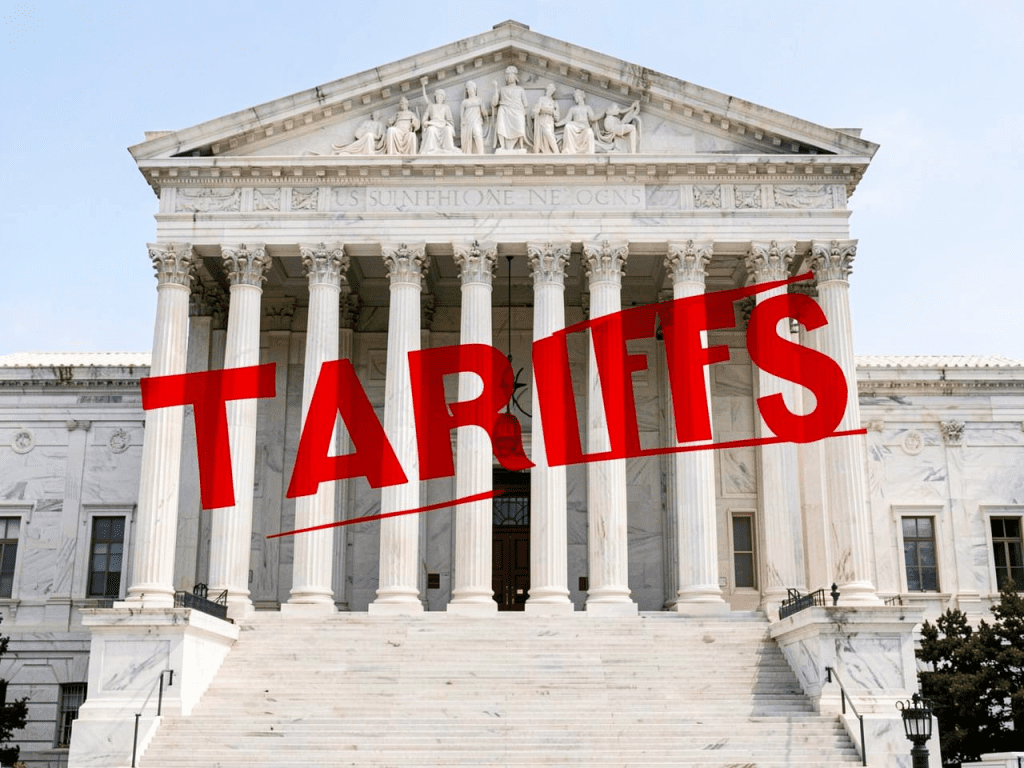
The U.S. Supreme Court has struck down a significant portion of the administration’s previous tariff measures, marking an important moment in the ongoing debate over trade policy and executive authority. While the ruling narrows the legal foundation for certain tariffs that had been in place, it does not signal the end of tariff activity.
In response to the decision, President Donald Trump announced that he will move quickly to restore tariffs using alternative legal authorities.
The President’s Response: Section 122 and Section 301
Following the ruling, President Trump announced he will rely on Section 122 of the Trade Act of 1974 to impose a new global 15% tariff, effective Tuesday, February 24, at 12:01 a.m.
There is an “in transit” exception, but it is VERY narrow in that goods have to be arrived, and Customs cleared before 12:01 am EST on Feb. 28th. Please note that even if you file entry before the deadline, Customs will base the entry date on the actual arrival date of the goods in the final US port.
U.S. Customs and Border Protection issued official guidance that it is ending IEEPA tariff collection effective at 12:01am on Tuesday February 24th. This timeline coincides with the enactment of the new Section 122 global tariff rate (15%).
What Is Section 122?
Section 122 allows a president to impose tariffs of up to 15% to address what the statute describes as “large and serious” balance-of-payments deficits, often tied to trade imbalances.
Key considerations for retailers:
- The tariff can remain in effect for up to 150 days.
- After 150 days, Congress must vote to extend it, or it expires.
- The authority is temporary by design, introducing a degree of uncertainty into long-term sourcing and pricing strategies.
Since most reciprocal tariffs were no higher than 20% and some were 15% or less, this will not greatly affect overall duties owed, but in some instances, importers may see a reduction. For example, many Chinese-origin goods were subject to a 10% IEEPA “fentanyl” tariff and a 10% reciprocal tariff. Those two tariffs will be removed and replaced by the 15% Section 122 tariff, resulting in a net 5% reduction in tariffs.
In addition, the administration announced it will use Section 301 to open investigations into what it describes as unfair trade practices. These investigations can lead to targeted additional tariffs based on the findings.
What About Refunds?
A major question now facing retailers is whether tariffs paid under the invalidated measures will be refunded and how that process will work. At this time, formal guidance has not yet been issued. The official word from US Customs on Saturday is that they are “CBP is working with other government agencies to fully examine the implications of the SCOTUS decision” and that “CBP will provide additional information and technical guidance for ACE filers as soon as it becomes available.”
A big question involves the refund of duties already paid. SCOTUS did not address this issue directly but referred the case back to the U.S. Court of International Trade so that the court could decide on the eligibility of refunds and the refund process. It may be weeks or months before that guidance is received from the CIT, and in the meantime, no refunds will be issued, and no refund claims can be filed.
IMPORTANT NOTE – We Suggest Importers Seek Legal Counsel Regarding Their Rights to IEEPA Duty Refunds
Because of the complexity of these tariff issues, it may be wise to seek legal counsel to protect your company’s rights to any IEEPA refunds. While a Customs Broker like CSS can file for refunds under either Post Summary Corrections (PSCs) or protests, the complexity of this matter may require importers to file suit in the Court of International Trade to protect their right to refunds. Relying on the administrative refund process (PSCs or protest) may not protect those rights.
We suggest that you use a law firm experienced in Customs law.
Please note that if a company fails to seek legal counsel, there is a risk that the Administration may so greatly limit refund eligibility that the company may not be able to recover its potential refunds. This is a very serious and complicated matter, and it is best to have guidance from an experienced attorney.
HFA is actively monitoring developments and will provide detailed, step-by-step information as soon as it becomes available, including who may be eligible for refunds, what documentation will be required, how to file, key deadlines, and any compliance considerations retailers should be aware of. Our goal is to ensure members have clear, actionable direction so they can move quickly and confidently once procedures are announced.
What You Should Do Now
- Review incoming inventory timelines ahead of the February 24 effective date.
- Connect with suppliers to assess potential pricing adjustments.
- Stay tuned for HFA updates regarding refund procedures and compliance guidance.
- Engage in advocacy efforts to ensure the retail voice is heard in future trade discussions.
We recognize that policy shifts like this create uncertainty. HFA remains committed to providing timely, practical information and advocating for solutions that protect the strength and sustainability of the home furnishings retail community. HFA remains focused on ensuring that policymakers understand how tariff policy affects small and mid-sized retailers, local jobs, and consumer affordability. Trade policy should strengthen American businesses, not create instability that undermines economic growth, workforce investment, and supply chain reliability.
More updates to come as we know them.
*Every importer is encouraged to sign up for their ACE Portal account and set up their ACH Refund access on their ACE Portal. The link to sign up for ACE is found here – https://www.cbp.gov/trade/automated/how-to-use-ace/portal-applying