
Furniture shopping has evolved into a fluid, hybrid experience. Today’s consumers move seamlessly between online browsing and in-store visits, gathering inspiration, comparing options, and seeking confidence before making a purchase. But according to new research from 3D Cloud, the real driver of buying behavior isn’t where customers shop, it’s how confident they feel in what they’re buying. And increasingly, that confidence is being powered by 3D visualization.
The Confidence Gap in Furniture Shopping
One of the study’s most striking findings is that uncertainty remains a major barrier to purchase. Nearly two-thirds of shoppers say they struggle to visualize how furniture will look in their homes. This hesitation slows decision-making, reduces purchase size, and impacts overall satisfaction.
As shopping journeys become more complex, the ability to bridge that visualization gap is becoming critical. Retailers that help customers clearly “see” the end result are gaining a measurable advantage.
3D Tools Drive Higher Spend and Satisfaction
The 2026 3D Cloud Furniture Shopping Trends Study, conducted by Provoke Insights, reveals that integrating 3D visualization into the in-store experience delivers significant business impact:
- 67% increase in high-ticket purchases
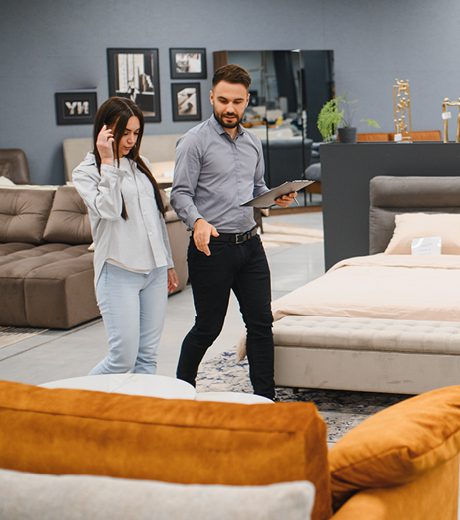
Shoppers using 3D tools with a salesperson were far more likely to spend $2,500 or more (55% vs. 33%). - Higher customer satisfaction
74% of shoppers who used 3D tools reported being “very satisfied,” compared to 56% who did not. - More items purchased by hybrid shoppers
Customers who engage across channels—and are more likely to use 3D—buy 57% more furniture pieces than in-store-only shoppers.
These findings point to a clear pattern: when customers can accurately visualize products, they buy more—and feel better about their purchases.
The Untapped Opportunity In-Store
Despite the benefits, adoption of 3D tools in physical retail remains limited.
- 87% of in-store shoppers interact with a salesperson
- But only 30% report using 3D visualization during that interaction
This gap represents a major missed opportunity. Nearly every shopper who experienced 3D in-store said it improved their experience, suggesting that broader adoption could significantly elevate both sales performance and customer satisfaction.
Rising Expectations Are Changing the Standard
As more consumers encounter 3D tools, expectations are shifting rapidly:
- A majority of shoppers now want 3D visualization as part of the buying process
- More than half believe retailers without 3D tools are falling behind
What was once a differentiator is quickly becoming a baseline expectation. Retailers that fail to adapt risk appearing outdated in an increasingly competitive market.
3D as a Strategic Growth Driver
The study makes it clear that 3D visualization is no longer just a digital add-on—it’s a strategic tool that directly influences revenue. By integrating 3D across both online and in-store touchpoints, retailers can:
- Reduce purchase hesitation
- Increase average order value
- Improve customer satisfaction
- Align with modern hybrid shopping behaviors
As Beck Besecker, CEO and Co-Founder of 3D Cloud, puts it: “Consumers want to see exactly what they’re buying before they spend. Retailers that make that easy are seeing stronger satisfaction and larger baskets.”
From Innovation to Expectation
The shift toward 3D visualization reflects a broader change in consumer behavior: shoppers expect clarity, confidence, and control before making significant purchases. Retailers that embrace this shift are not only improving the customer experience, but they’re also driving measurable growth.
As hybrid shopping continues to dominate, the question is no longer whether to adopt 3D tools, but how quickly retailers can scale them across the entire customer journey. Those who do will be better positioned to meet rising expectations and capture higher-value sales in the process.