
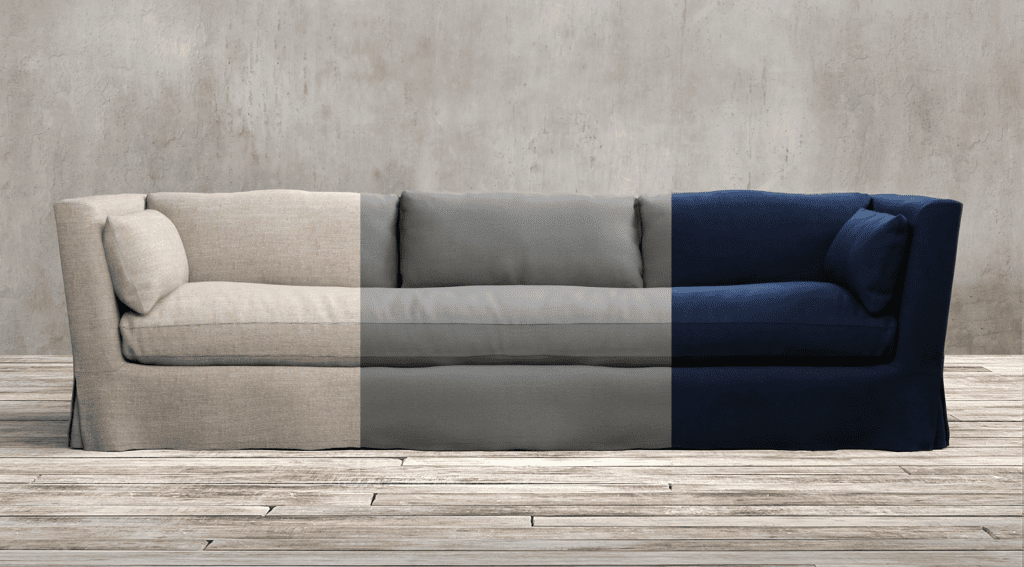
In today’s digital-first shopping environment, your product images are doing far more than just “showing” a sofa or dining table; they’re selling it.
For furniture retailers, where customers can’t physically sit, touch, or experience scale online, imagery becomes the single most powerful driver of engagement, trust, and conversion. Yet many retailers still struggle to produce consistent, high-quality visuals across their entire catalog without overspending or overextending their teams.
Let’s break down why product imaging matters so much, and how retailers can realistically achieve it at scale.
The Real Impact of Product Imagery on Sales
When customers browse your website, they’re making split-second decisions based on visuals. High-quality imagery directly influences:
-
Conversion Rates
Clear, detailed images reduce hesitation. Customers are more likely to purchase when they can confidently understand materials, color, and scale.
-
Perceived Brand Value
Inconsistent or poorly lit images can make even premium furniture look inexpensive. On the flip side, polished, cohesive imagery elevates your entire brand.
-
Returns and Customer Satisfaction
Accurate visuals—especially color consistency and dimensional context, help set the right expectations, reducing costly returns.
-
Omnichannel Performance
From e-commerce to social media to print catalogs, strong imagery ensures consistency across every customer touchpoint.
The Challenge: Scaling Quality Without Breaking the Budget
While the importance is clear, the execution is where most retailers hit friction.
Traditional product photography often involves:
- Expensive studio setups
- Time-intensive editing workflows
- Multiple photoshoots for different image types
- Inconsistent results across product lines
For large or growing catalogs, this becomes difficult to sustain. Producing just a handful of images per product is no longer enough. Today’s shoppers expect full image suites, including lifestyle scenes, multiple angles, and detailed views.
The result? A constant trade-off between quality, speed, and cost.
A Shift Toward Smarter, Scalable Imaging
To keep up with demand, many retailers are exploring more efficient ways to produce high-quality visuals, leveraging automation and AI to remove bottlenecks while maintaining professional standards.
This is where platforms like PyxMagic come into play, not as a replacement for creativity, but as a way to streamline the heavy lifting behind product imaging.
Making High-Quality Imaging More Achievable
Instead of relying solely on traditional workflows, newer approaches focus on simplifying production while improving consistency.
Bulk Processing for Efficiency
Rather than editing images one at a time, modern tools allow retailers to process large batches simultaneously, sometimes hundreds at once. This includes:
- Automatic background removal
- Lighting and shadow adjustments
- Standardization across product lines
This kind of automation significantly reduces production timelines, turning what once took weeks into just days.
Consistency Through Automated Color Correction
Color accuracy is one of the biggest challenges in furniture photography, especially across different materials and lighting conditions.
Solutions like automated color calibration ensure:
- Consistent tones across all images
- Reduced need for manual editing
- Better alignment between online visuals and real-life products
For retailers, this directly impacts customer trust and return rates.
Expanding Beyond Basic Product Shots
Today’s customers expect more than a single front-facing image.
Retailers are increasingly building complete image suites, including:
- Clean silhouettes for e-commerce
- Lifestyle imagery to inspire buyers
- Detail shots to highlight craftsmanship
- Dimension overlays to communicate scale
AI-driven tools can now generate photorealistic lifestyle environments, helping products feel contextualized without requiring additional photoshoots.
Simplifying Image Editing and Corrections
Even with strong photography, small imperfections happen—unwanted elements, labels, or inconsistencies.
Newer image repair capabilities allow teams to:
- Quickly remove distractions
- Adjust visual elements
- Make refinements without reshooting
This flexibility reduces costly rework and keeps production moving.
Creating Consistent, Branded Backgrounds
A cohesive visual identity matters. Instead of relying on varied or inconsistent setups, retailers can now apply standardized environments such as:
- Clean studio-style backdrops
- Custom color backgrounds
- Subtle shadows for depth and realism
This ensures every product looks polished and aligned with the brand.
Preparing Images for Every Channel
From mobile screens to large-format print, image quality needs to scale.
High-resolution upscaling makes it possible to:
- Enhance lower-resolution images for digital zoom
- Produce print-ready assets up to 8K quality
- Maintain clarity across all marketing channels
The Bigger Picture: Operational Benefits
Beyond aesthetics, improving product imagery has a measurable business impact:
- Faster product launches due to reduced production timelines
- Lower costs by minimizing external editing and reshoots
- Improved merchandising agility with scalable workflows
- Stronger e-commerce performance through richer visual content
By removing manual bottlenecks, retailers can focus more on strategy and less on production logistics.
A New Standard for Furniture Retail
The expectations around product imagery aren’t going away – they’re increasing.
Customers want to visualize how a piece fits into their lives before they click “buy.” Retailers who can deliver that experience consistently, efficiently, and at scale will have a clear competitive advantage.
What’s changing isn’t just the quality of images—but how that quality is achieved.
With the right combination of automation, AI, and streamlined workflows, high-quality product imagery is no longer reserved for large teams with big budgets. It’s becoming accessible, scalable, and essential for retailers of all sizes.