For decades, home furnishings retail has relied on a familiar merchandising formula: create a beautiful room, put the furniture in it, add a few accessories, and allow customers to recreate the look at home. That formula still works, but today’s consumer is increasingly looking for something different. Rather than purchasing an entire room that looks like it came straight off a showroom floor, shoppers are gravitating toward homes that feel personal, layered, comfortable, and collected over time. They want help creating a home that reflects how they live—not simply a perfectly coordinated space. For home furnishings retailers, this shift creates an important merchandising opportunity.
Three merchandising trends are particularly relevant: the move from room sets to, the return of color and pattern, and the growing importance of accessories. Together, they offer home furnishings retailers a way to create more inspiring stores, increase attachment sales, and give customers more reasons to visit.
Merchandising Trend #1- From Room Sets to Lifestyle Merchandising
Traditional room merchandising is organized around furniture categories: living room, dining room, bedroom, occasional tables, and so on.
Lifestyle merchandising takes a different approach. Instead of asking, “What furniture belongs in this room?” the retailer asks, “How does this customer want to live in this space?” That distinction may sound subtle, but it can dramatically change the way a showroom is presented.
Consider a living room. A traditional vignette might feature a sofa, loveseat, coffee table, two end tables, and a matching entertainment unit. Everything coordinates, and the customer immediately understands what products belong together.
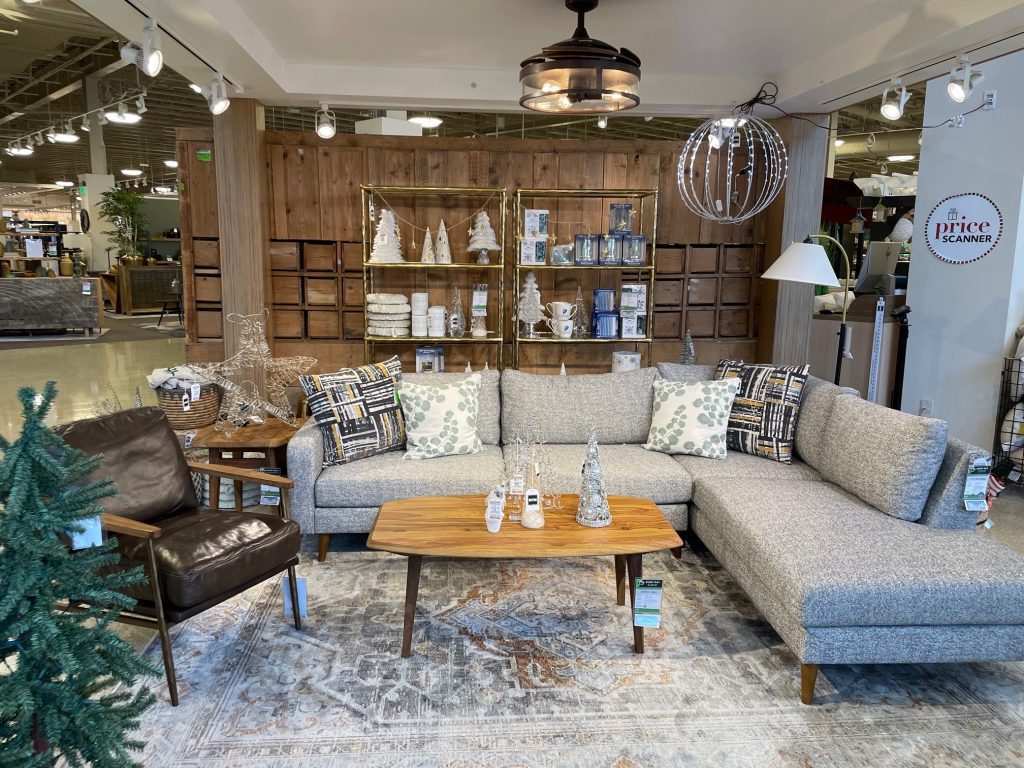
A lifestyle-oriented vignette might feature a comfortable sectional, an oversized chair, a vintage-inspired side table, a textured area rug, layered lighting, artwork, books, plants, and a few decorative objects. The pieces coordinate without necessarily matching.
The second room tells a story. It suggests how the customer might actually spend Saturday morning there, entertain friends, relax with a book, or watch a movie with the family.
Why Does This Matter?
Today’s shopper is exposed to an enormous amount of design inspiration through social media, design websites, influencers, television, and online retailers. They are becoming more comfortable mixing styles and aren’t necessarily looking for a room where every piece comes from the same collection. That means the retailer’s job is increasingly to become a curator and source of inspiration, rather than simply a place where customers purchase matching furniture.
How do you do it?
Start by creating vignettes focused on lifestyles and customer needs, rather than strictly on collections.
Examples might include:
- The Casual Family Room
- The Entertainer’s Dining Space
- The Small-Space Solution
- The Cozy Reading Corner
- The Collected Bedroom
- The Modern Farmhouse Retreat
- The Apartment Living Room
- The Indoor/Outdoor Gathering Space
The furniture remains important, but it becomes part of a larger story. This approach also gives sales associates a better starting point for conversations. Instead of simply explaining features and dimensions, they can ask questions such as:
- “How do you use your living room?”
- “Do you entertain often?”
- “Are you looking for something more formal or more relaxed?”
- “What do you already own that you want to keep?”
Those questions lead naturally to a more personalized product recommendation.
Merchandising Trend #2- Color and Pattern Are Coming Back—But They Need a Strategy
The long reign of gray and neutral interiors isn’t necessarily over, but the market is clearly making room for more personality. Warm neutrals, natural wood tones, earthy colors, richer accent colors, and patterns are increasingly showing up in furniture and home décor. The important point for home furnishings retailers is not simply to “add more color.”
The opportunity is to use color and pattern strategically.
Customers don’t necessarily want to replace every neutral piece in their home. In many cases, they want an easy way to make an existing room feel fresher and more personal. That makes color particularly powerful in merchandising.
Think in layers- A useful merchandising strategy is to build color into the assortment in three layers.
Layer One: The foundation
These are the core pieces that provide stability and broad appeal:
- Cream
- Beige
- Taupe
- Natural wood
- Soft gray
- Black
- Warm whites
These colors tend to have longer selling lives and can form the foundation of the assortment.
Layer Two: The trend layer
This is where retailers can introduce a stronger personality:
- Olive and sage
- Terracotta
- Deep blue
- Burgundy
- Mustard
- Warm brown
- Rich greens
- Muted jewel tones
These colors can appear in upholstery, occasional chairs, dining chairs, case goods, rugs, and other merchandise.
Layer Three: The accent layer
This is where the customer can experiment:
- Pillows
- Throws
- Artwork
- Lamps
- Decorative objects
- Tabletop
- Small rugs
- Vases
The advantage of this three-layer approach is that the customer doesn’t have to make a major commitment to participate in a current design trend. A neutral sofa can remain the anchor while a new rug, a pair of pillows, a lamp, and a piece of artwork completely change the room’s personality.

Merchandising implication: don’t hide the color
One common mistake is putting the more interesting colors and patterns into the assortment, but then merchandising them so conservatively that customers barely notice them. If you’ve invested in distinctive merchandise, give it a stage.
Create focal displays around it. Group complementary products nearby. Use signage or storytelling to explain how customers can incorporate the look without completely redesigning their homes.
And don’t underestimate the importance of the color story throughout the store. A customer walking through the showroom should be able to see relationships between products, even when those products come from different vendors or categories.
That is where the retailer becomes a curator.
Merchandising Trend #3- Accessories Are No Longer Just “Finishing Touches”
Accessories have traditionally been treated as the final step in merchandising a furniture display. Today, they deserve considerably more attention. Why?
Accessories offer customers a relatively inexpensive way to change the look of their home and allow home furnishings retailers to create more frequent, lower-ticket purchase occasions. A customer may purchase a sofa once every several years. But, they may purchase a pillow, lamp, rug, vase, piece of artwork, or decorative object much more frequently. That makes accessories valuable not only as margin-producing merchandise, but also as a way to maintain an ongoing relationship with the customer.
Accessories can solve the “I like it, but I’m not ready” problem
A customer might walk into a showroom and fall in love with a particular design direction but not be ready to purchase a $3,000 sofa. That doesn’t have to mean the end of the sale.
They might be ready for:
- A new area rug
- A pair of lamps
- Accent pillows
- A throw
- Artwork
- A mirror
- A small occasional table
Accessories can provide a lower-cost entry point into the retailer’s brand and design point of view. And once the customer takes something home, you’ve created another opportunity for a future furniture purchase.
The Key: Merchandise Accessories with Furniture, Not Away From It
One of the biggest opportunities for furniture retailers is to stop treating accessories as a separate department.
- If a lamp belongs on the table, put the lamp on the table.
- If the artwork completes the wall, hang it.
- If pillows make the sofa look better, put them on the sofa.
- If a rug defines the seating area, put the furniture on the rug.
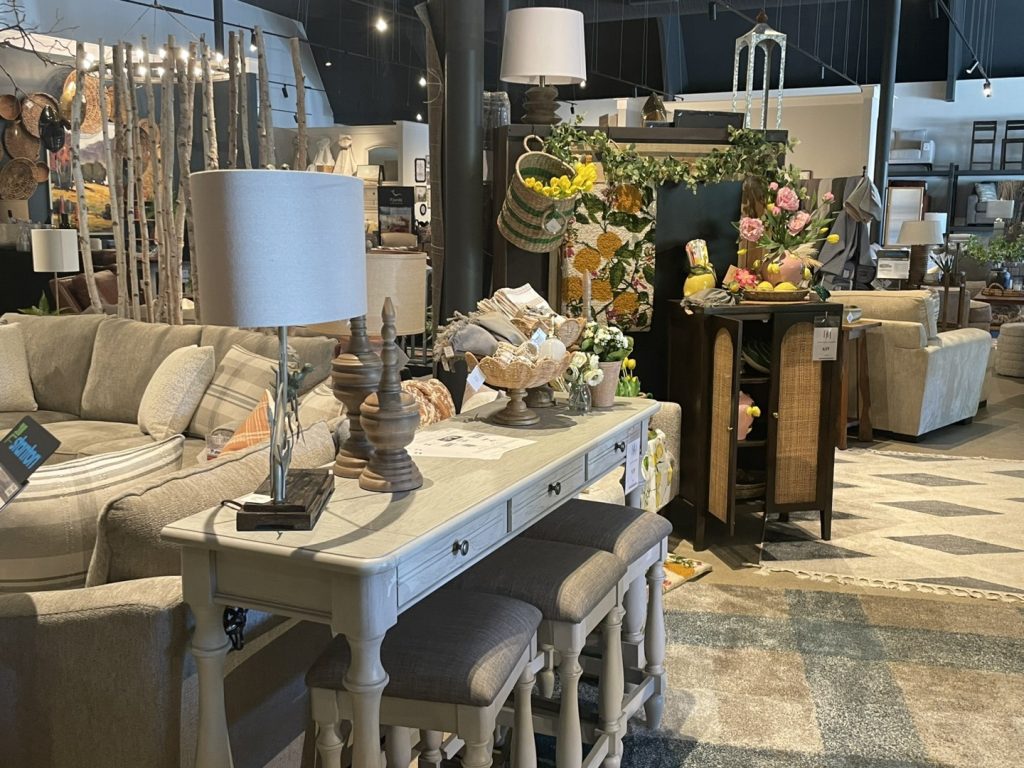
This sounds obvious, but the commercial impact can be significant. The customer sees the complete solution rather than a collection of individual products. More importantly, it gives the sales associate an opportunity to sell the whole look.
Instead of:
“That’s a sofa for $2,499.”
The conversation becomes:
“This sofa works beautifully with this rug and these chairs. If you want to recreate this feeling at home, we can help you pull the entire look together.”
That’s a much richer selling conversation.
Create “Attachment” Merchandising
Merchants should also begin thinking about accessories in terms of attachment rates.
Every major furniture purchase represents an opportunity to ask:
What else naturally goes with this?
For a sofa:
- Rug
- Pillows
- Throw
- Coffee table
- End table
- Lamp
- Artwork
For a dining table:
- Dining chairs
- Rug
- Pendant lighting
- Tabletop
- Centerpiece
- Bar or server
For a bedroom:
- Nightstands
- Lamps
- Bench
- Bedding
- Rug
- Artwork
- Mirror
The goal isn’t to pressure customers into buying more. The goal is to make it easier for customers to see the complete solution.
Bringing the Three Trends Together
The real opportunity emerges when these three trends are combined. Imagine a home furnishings retailer creates a vignette called “The Collected Living Room.”
The foundation is a comfortable neutral sofa. Instead of pairing it with a matching loveseat, the merchant adds two contrasting accent chairs. A vintage-inspired wood table sits alongside a contemporary lamp. A patterned rug anchors the seating area. Pillows introduce olive and rust tones. Artwork, books, ceramics, and greenery add personality. Nothing looks overly coordinated. Everything looks intentional. The customer isn’t simply seeing furniture. They’re seeing a lifestyle they can imagine adapting to their own home. That’s the power of modern merchandising.
For home furnishings retailers, these merchandising trends don’t necessarily require a complete overhaul of the store. They require a shift in thinking.
And perhaps most importantly, remember that good merchandising isn’t simply about making the store look beautiful. It’s about making the customer’s decision easier. When merchandise is thoughtfully curated, customers don’t have to imagine how a sofa might work with a rug, or how a lamp might change the feeling of a room. They can see the answer right in front of them.
That is where today’s home furnishings retailer can create real value: not by selling a room, but by helping the customer create a home that feels like their own.
The creation of this article included the use of AI with input from industry experts and was edited by human content creators.