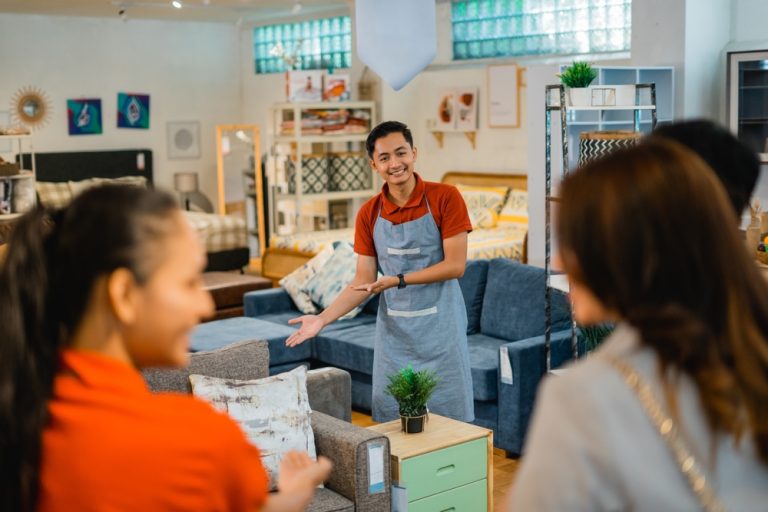

Retail furniture buying in the United States is undergoing seismic shifts, marked by new technologies, evolving consumer expectations, and changes accelerated by recent global events. The ” What Shoppers Want: U.S. Insights on Furniture & the Future of Retail” presentation in the HFA Retailer Resource Center at the High Point Market in October 2025, offers an in-depth look into how Americans are shopping for furniture and how retailers can adapt to meet, and even lead, these changes. Drawing insights from a survey of 9,000 U.S. consumers and direct industry experience, the session outlines both the challenges and the exciting possibilities facing furniture manufacturers, retailers, and designers today.
For decades, furniture buying habits remained largely unchanged, anchored in trusted local showrooms and repeat purchases based on long-standing relationships. However, digital innovation and lifestyle shifts have catalyzed new trends at a faster pace in the past five years than in the previous twenty. Retailers are now pressed to keep pace with consumers who are tech-savvy, information-driven, and expect seamless digital-to-physical journeys. This education-rich overview draws from Home by Me’s research and product development, providing retailers with actionable strategies and examples for modernizing their approach.
Retailers reading this article will find a thorough exploration of the changing customer, new definitions of brand loyalty, and hybrid shopping behaviors. The article examines technologies such as AI and 3D visualization, exploring how these tools enable a new kind of buyer journey and the practical approaches that forward-thinking brands can take. By the end, retailers will be equipped with knowledge to bridge gaps, elevate customer experience, and capture a greater share of a shrinking marketplace.
The Evolution of Consumer Behavior
Furniture buying in the U.S. has shifted more in the last five years than in the previous two decades. The emergence of digital platforms, combined with post-pandemic lifestyle shifts, has revolutionized how consumers discover, select, and purchase furniture. According to HomeByMe’s research, 63% of consumers begin their journey by seeking inspiration online, with nearly half (43%) ultimately completing purchases online. While individual pieces, such as couches or tables, are frequently purchased directly through e-commerce, complex “project” purchases still heavily rely on in-store engagement.
Interestingly, the journey begins at home, with shoppers researching options that match their style, budget, and delivery requirements entirely from their phones or laptops. This way of shopping marks a clear departure from previous generations who visited multiple showrooms for inspiration. Even older legacy online furniture retailers, such as Wayfair and Casper, are opening physical stores to create “destination” experiences, blending the tactile appeal of showroom shopping with digital convenience. The omnichannel approach is no longer optional; it is essential to meet customer expectations.
Retailers must recognize that the barriers to capturing a share of consumer spending have become more pronounced, particularly in the wake of economic pressures such as tariffs, inflation, and supply chain disruptions. With consumers spending less overall, home furnishing businesses must maximize every touchpoint, from website experience to in-store collaboration, to secure their share of a smaller “pie.” Those who resist change risk falling behind, while leaders who adapt to the evolving journey find new paths to growth and success.
Redefining Loyalty in the Furniture Market
Brand loyalty in the furniture sector has undergone a dramatic transformation, influenced by the proliferation of digital tools and social media. Previous generations often purchased furniture from local retailers that their families had known and trusted, but modern shoppers value a different set of criteria. According to the HomeByMe study, buyers aged 30-39 are more confident when shopping online, are brand-oriented, and are digital leaders driving configurator use.
The tactile experience remains critical, particularly when purchasing items that require physical interaction, especially the youngest buyers (18-29-year-olds)—think sitting in a chair or testing the texture of a fabric. Nevertheless, today’s shoppers are emotionally invested long before they visit a store, having spent considerable time visualizing and planning through digital solutions. Offering cutting-edge solutions that facilitate this new process will help retailers increase individual sales and entire “project” narratives, where consumers plan and purchase complete room setups.
Indeed, personalization now plays a key role in attracting and maintaining customer loyalty. Roughly one-third of consumers rank personalization as one of their top priorities. Retailers must provide tools that enable customers to visualize products in various colors, configurations, and layouts within virtual representations of their rooms. This capability helps buyers narrow choices and strengthens emotional engagement, making them far more likely to complete purchases at the retail location they have invested in digitally.
The Rise of Hybrid Shopping and the “ROPO” Trend
A marked trend in the furniture sector is hybrid shopping, captured by the acronym “ROPO”—Research Online, Purchase Offline. Younger generations are not driving from store to store. Instead, they utilize digital research to shortlist products, styles, and retailers that align with their needs and preferences. They only visit physical stores when they are ready to validate their choices, focusing their in-person interactions on confirmation and tactile experiences.
Retailers who embrace this behavior can attract a more qualified, purchase-ready audience. When shoppers arrive, they are already 80-90% through their journey, seeking the expertise of sales associates to fine-tune designs, confirm fit, and validate decisions. This process reduces sales cycles and maximizes conversion rates, as demonstrated by examples presented in the presentation. One consumer described buying a recliner online for an elderly parent but discovered the importance of physical confirmation when the first purchase was unsuitable. The second visit, armed with specific online research, resulted in a quick and confident in-store purchase.
Hybrid journeys benefit both consumers and retailers, as they streamline decision-making and enhance engagement, resulting in larger and more personalized sales. Retailers who do not provide integrated digital and physical experiences will not be considered in consumers’ journeys. The future lies in supporting buyers who move fluidly between channels, with each touchpoint reinforcing the next.
Digital Solutions in the Buyer’s Journey: AI and Visualization
Digital innovation in furniture retail increasingly incorporates AI and advanced visualization, reshaping how consumers design and purchase furniture. The HomeByMe Dassault Systèmes is investing in tools such as 3D planners, virtual twins technologies, and AI-assisted design. Although overall adoption is still limited, with 22% of surveyed consumers using AI in their design process, the trend is growing, especially among shoppers aged 30-39, where adoption rates rise to 42%.
Most consumers using AI tools rely on popular platforms like ChatGPT, primarily for inspiration or to define design styles such as “modern farmhouse” or “boho chic.” These solutions, although helpful for concept development, are insufficient for space planning. Advanced tools like Midjourney or Presti AI enable the creation of photorealistic mood boards, but they lack end-to-end planning capabilities. HomeByMe’s platform addresses this gap by allowing consumers to plan architectural layouts and visualize products in context.
Seamless Omnichannel Experiences: Bridging Online and In-Store
Omnichannel retailing—guiding consumers smoothly from online inspiration to in-store validation—is rapidly becoming the new standard in furniture retail. Digital solutions do not compete with the human experience; rather, each fulfills distinct roles at different stages of the process. HomeByMe’s cloud-based design solutions exemplify this, allowing customers to start their journey on a retailer’s website, create or personalize designs, and then continue seamlessly in-store, where staff have instant access to these projects.
This approach supports the hybrid customer journey with no barriers to engagement. Consumers can design anywhere, anytime, and sales associates use the same online interface for live collaboration. The process is intuitive and eliminates the need for lengthy tutorials. Projects are branded and tailored to each retailer’s catalog, further enhancing the personalization and emotional investment that drives purchase decisions.
Physical stores become destinations for validation, confirmation, and upselling. Digital exploration, paired with in-store support, ensures buyers are closer to making a purchase when they enter the showroom. Retailers that effectively blend channels will be well-positioned to succeed in the modern market.
Empowering Retail Staff and Enhancing Collaboration
As digital tools add convenience, the role of the furniture sales associate is evolving, becoming more focused on expertise and collaboration. Salespeople now engage with well-prepared buyers who are 80% or more through the decision-making process. This empowers sales experts to offer nuanced support, such as recommending spatial adjustments, clarifying clearance issues, or suggesting complementary products, drawing on their knowledge to close and enhance the sale.
Retail experts who are equipped with project configurators or planners are able to co-create with customers in real time, visualizing fabrics, layouts, and options directly on tablets or computers. The live configuration solution becomes their first assistant, facilitating upsells and mitigating mistakes. For example, a consumer who has digitally designed their living room but seeks confirmation on the ergonomics or flow can immediately see adjustments suggested by the associate, expediting purchasing decisions.
This collaborative approach enhances job satisfaction for sales teams and increases customer confidence, leading to larger and more satisfying sales. For retailers, the ability to track engagements, generate actionable leads, and provide consistent experiences strengthens brand reputation and customer loyalty. The synergy between skilled staff and empowered customers becomes a key competitive advantage in the market.
Overcoming Adoption Barriers: Opportunities for Retailers
Despite the clear benefits and growing consumer demand, many retailers are lagging in adopting digital visualization and AI solutions. The retailer surveys echo this sentiment, pointing to digital initiatives that are often underfunded, siloed in IT departments, or not fully embraced as core sales enablers. The gap between consumer expectations and retailer tech readiness marks both a challenge and a market opportunity. Leaders who move quickly to close this divide stand to gain significant market share.
HomeByMe’s solutions demonstrate how existing technology can be leveraged without complex implementations. With smartphone-enabled Room Scanners and intuitive planning interfaces, retailers can offer advanced 3D capabilities to consumers. The metadata generated from design logins is a powerful lead generation tool, providing insights into consumer preferences and nurturing warm leads for sales staff.
Leading the Future of Furniture Retail
Furniture retail is at an inflection point, shaped by technological innovation, shifting demographics, and new consumer priorities. It requires a deep understanding of the hybrid journey, investment in visualization technologies, and a commitment to omnichannel excellence. Brand loyalty is earned not through tradition, but by facilitating personalization, enabling digital exploration, and delivering expert in-store support.
Retailers who embrace these changes create more meaningful, efficient, and rewarding experiences for both their customers and sales teams. They will be best equipped to capture a growing share of the furniture market and income, setting the pace for others to follow.
For extensive insights and data, retailers are encouraged to explore the full report from HomeByMe, arming themselves with actionable intelligence. The future is hybrid, personalized, and digital-first; the time to transform and lead that future is now.